Most mocktails taste thin because they are built as an afterthought, a virgin version of a cocktail recipe with the spirit simply removed and nothing added to fill the gap. Alcohol carries weight, warmth, and a bit of bitterness that a straight juice-and-syrup swap does not replace.
What actually replaces the alcohol
A cocktail base built for dual use, meaning it was designed from the start to work with or without spirit, compensates with a slightly higher concentration of acid, spice, or bitter elements. NO. 03, the Spicy Paloma base, uses jalapeño heat to fill some of the space alcohol would normally occupy. NO. 06, the Espresso Martini base, uses cold brew intensity and oat for body.
Why this differs from a typical mocktail
A typical restaurant mocktail is built by subtraction: take the cocktail recipe, remove the spirit, serve. A properly built non-alcoholic base is built by addition: start from what a good drink needs structurally, then decide whether alcohol or something else fills that structural role.
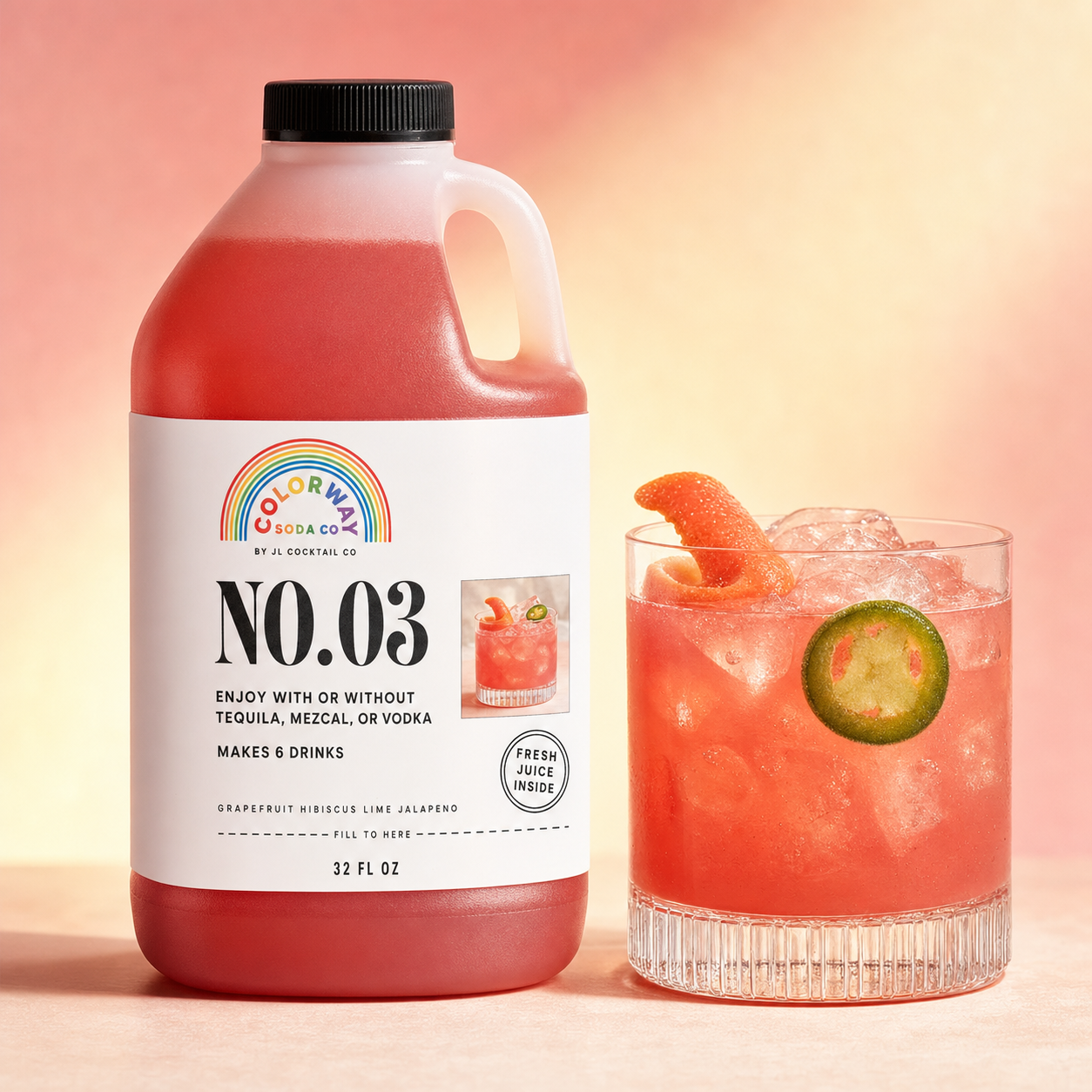
Colorway NO. 03 (Spicy Paloma)
Grapefruit, hibiscus, lime, and jalapeño. Add tequila for a Paloma, or keep it zero-proof with the same kick.
View product →