A restaurant cocktail program has three real costs: the ingredients, the labor to build and test the recipes, and the labor to pour them correctly every night with a rotating staff. Most operators only budget for the first one. The second two are where programs actually lose money.
The math nobody puts on a spreadsheet
Say you want to add four cocktails to your menu. A consultant to build and test that menu runs $2,000 to $8,000 depending on who you hire and how polished you want it. Then you need a bartender who can execute all four drinks the same way at 9pm on a Friday with a backed-up well and a new hire on the rail. That consistency problem never goes away. It is the reason chains standardize and independents struggle.
A batch cocktail base skips both costs. The recipe is already built, tested, and consistent because it comes pre-made. Your staff pours a set amount, adds your spirit, and garnishes. No shaking, no ratios, no muscle memory required. You get the same drink whether your best bartender is on the rail or your newest hire is covering a shift.
How the "low or no cost" part actually works
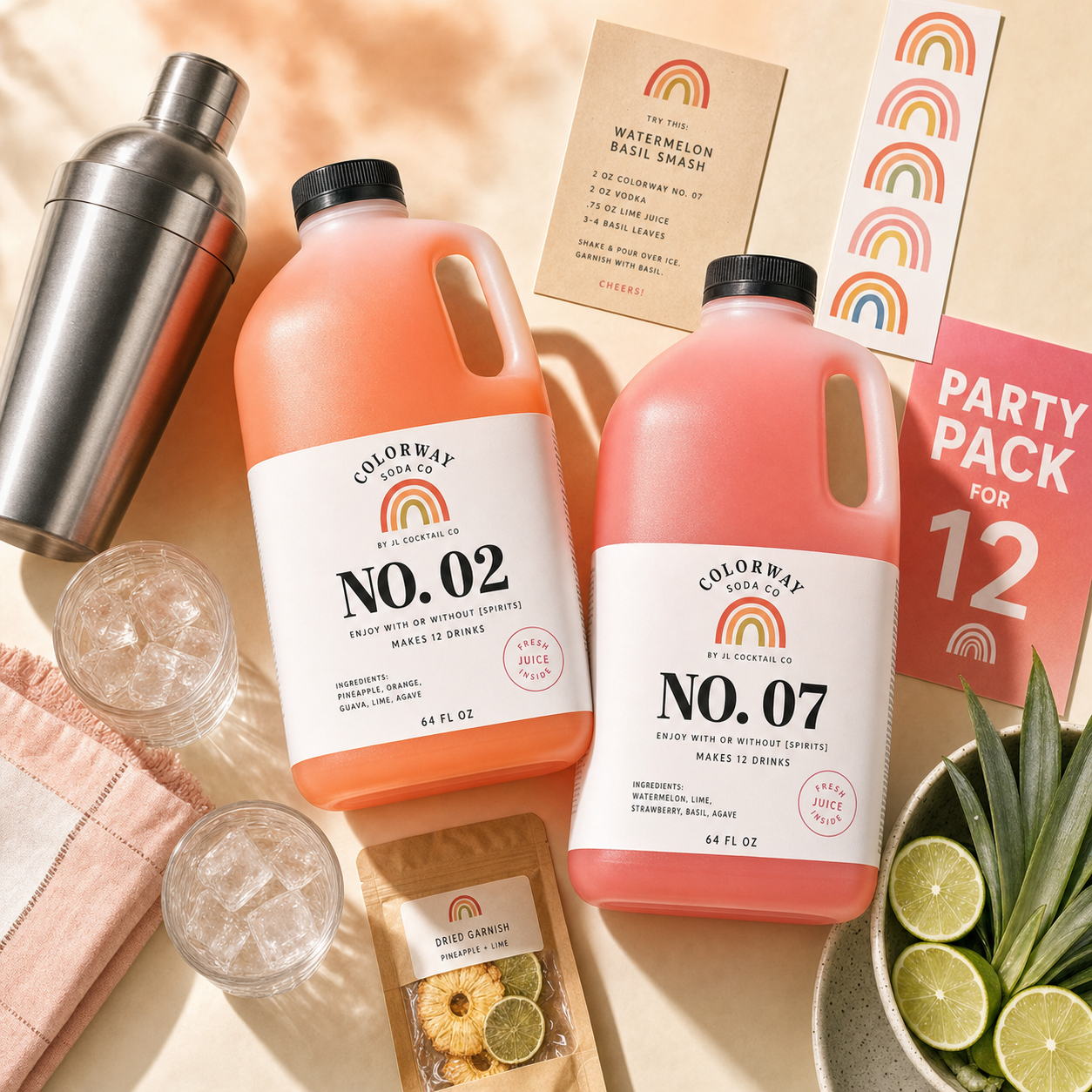
Here is the model. You buy Colorway's numbered cocktail bases wholesale, at a price built for volume, not a la carte retail pricing. You add your own spirit, at whatever pour and markup your bar program already runs. Your cost per drink stays close to what you are already paying for a from-scratch cocktail, minus the labor to build and maintain the recipe. In a lot of cases, once you factor out R&D time, waste from inconsistent pours, and the cost of a consultant, the program pays for itself before you sell a single drink.
"No cost" is not a marketing line. If you are already buying mixers, juice, or syrup for your bar, you are likely paying more per drink in ingredients and labor than a batch base costs you wholesale. The swap is often a wash on cost and a straight upgrade on consistency.
Alcoholic and non-alcoholic from the same eight bottles
Every Colorway base is built to work both ways. Add your spirit for a full cocktail, or pour it straight for a zero-proof menu item. That means one wholesale order gives you a boozy program and a non-alcoholic program at the same time, with no separate NA syrups, no separate NA recipe development, and no separate line on your prep list.
This matters more than it used to. Guests ordering zero-proof are not a niche anymore, and a restaurant with one sad mocktail on the menu is leaving money on the table every night that section gets skipped.
What you actually get
- Eight numbered cocktail bases, each mapped to a drink your guests already know: Bee's Knees, Piña Colada, Spicy Paloma, Garden Gimlet, Passion Fruit Martini, Espresso Martini, Watermelon Margarita, Mango Daiquiri.
- A menu that works with or without alcohol, using the same inventory.
- Consistent pours from any staff member, any shift, no training curve.
- Wholesale pricing built for recurring restaurant volume, not single-bottle retail.
- A white-label option if you want the program under your own bar name with no visible Colorway branding.
Who this is for
This works best for restaurants and bars that want a real cocktail program without hiring a consultant or carrying a bar director on payroll. It is not for high-volume craft cocktail bars building a from-scratch, bartender-forward program as their core identity. If your bar's whole draw is a bartender shaking drinks in front of guests, keep that. This is for the restaurant next door that just wants four solid cocktails on the menu without the overhead.
Colorway Wholesale Inquiry
Ask about wholesale pricing and white-label options for your restaurant or bar.
View product →